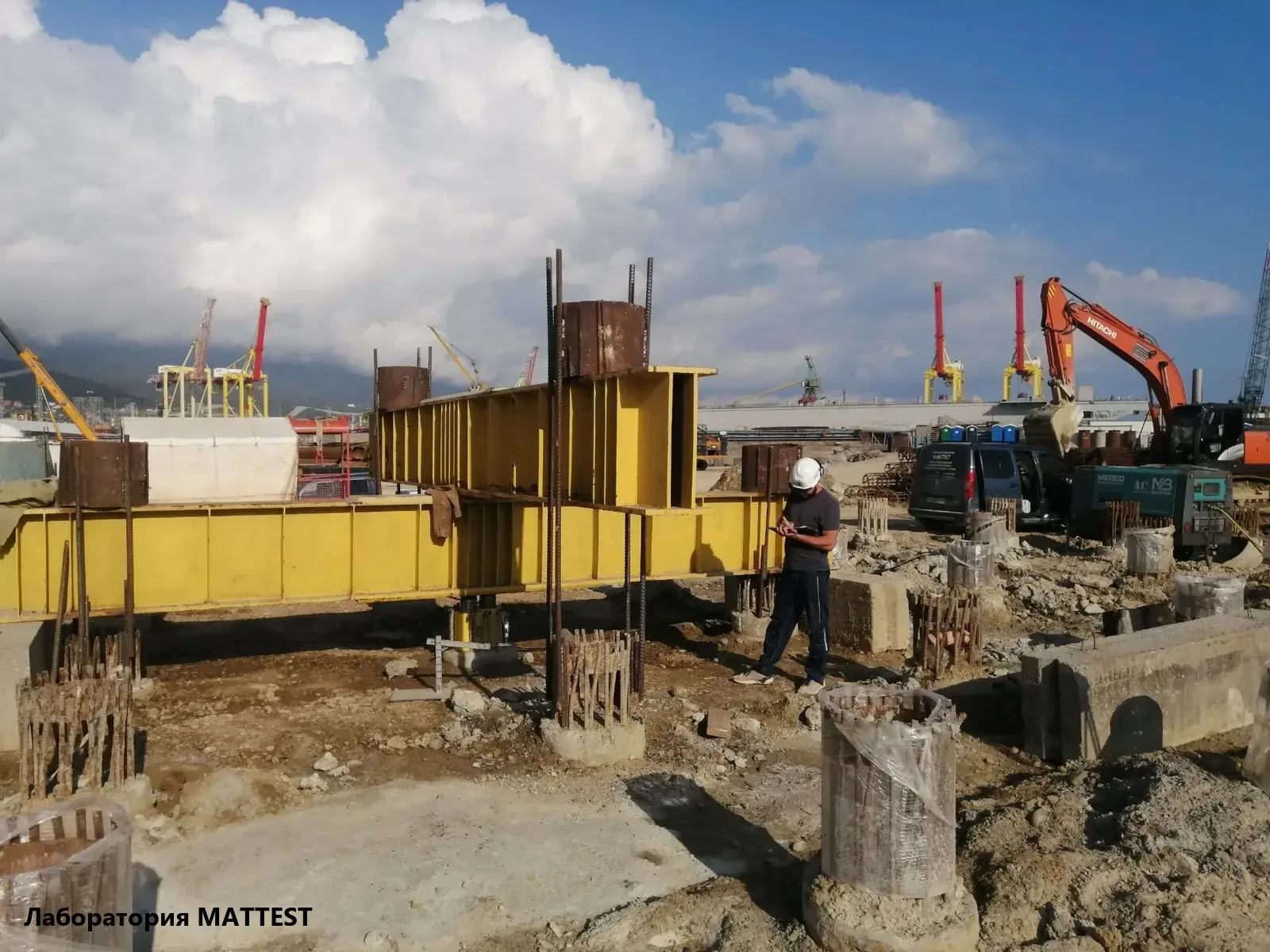
Pile testing: static, dynamic and integrity testing
MATTEST performs comprehensive pile testing on construction projects across Uzbekistan: verification of pile behaviour under design loads, determination of bearing capacity and integrity control of the pile shaft.
We prepare the test program, select the loading scheme, run measurements and issue a technical test report.
Six directions of pile testing
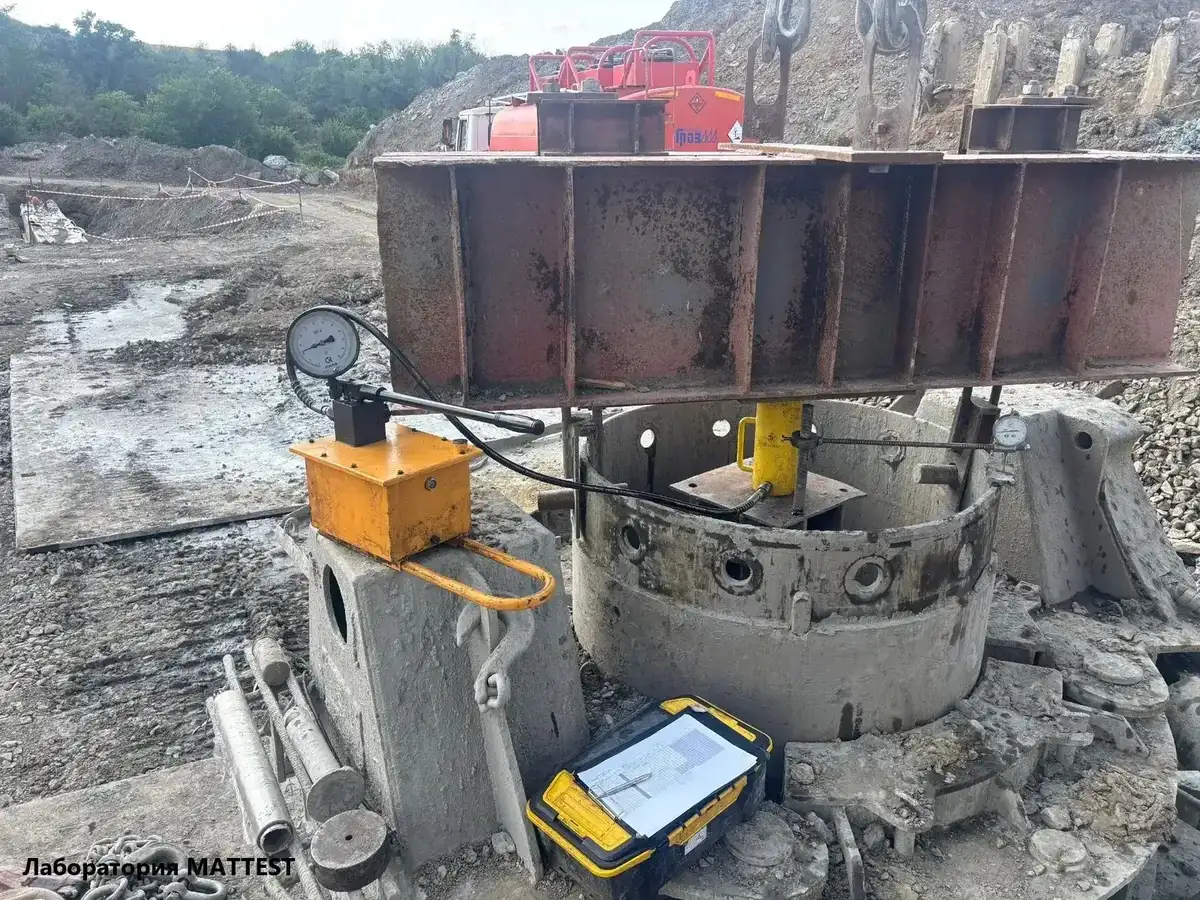
- 01Static compression load test
Verifies pile behaviour and soil-pile interaction under vertical load.
- 02Static uplift load test
Determines pile resistance to vertical pull-out from the ground.
- 03Static lateral load test
Verifies pile behaviour under horizontal (lateral) action.
- 04Dynamic RSM-PDT testing
Digital recording of pile response to impact and rapid bearing-capacity assessment for batch quality control.
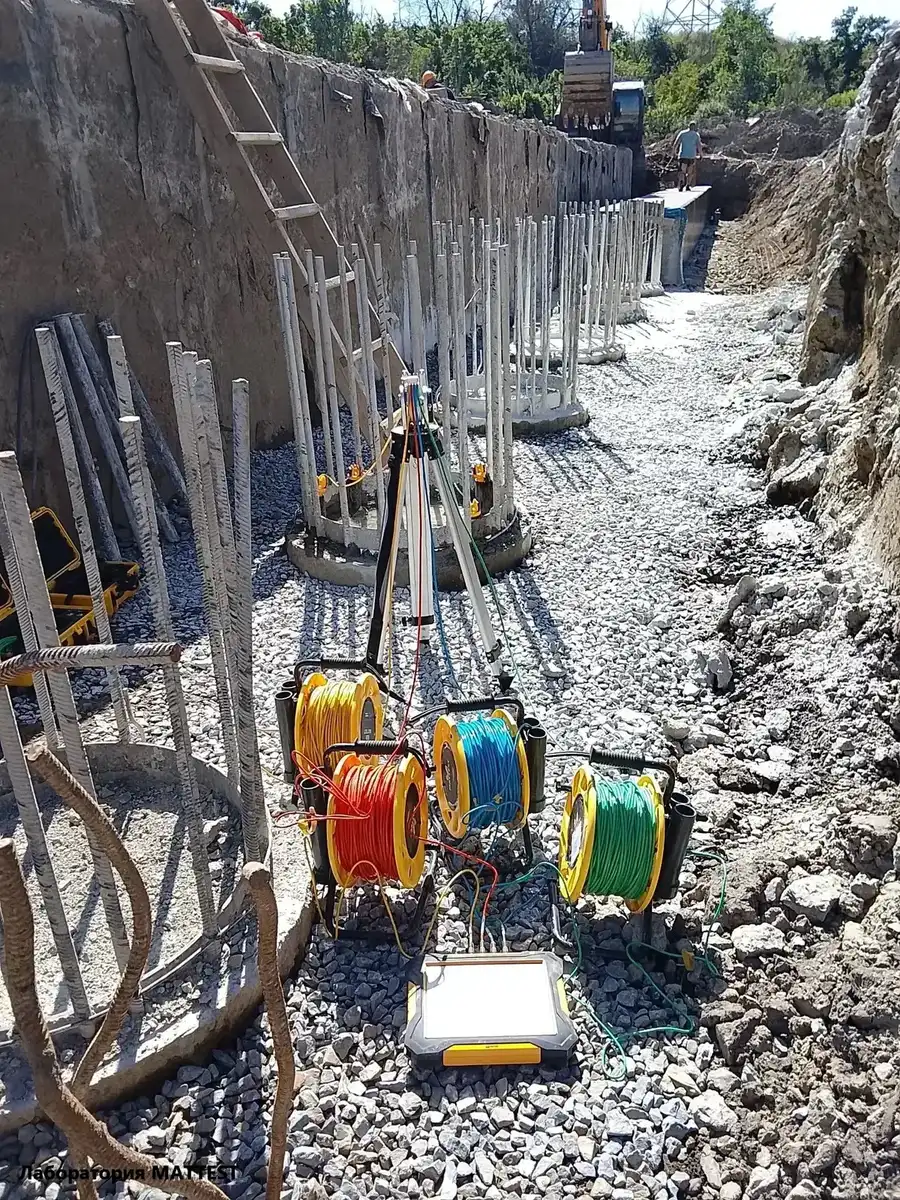
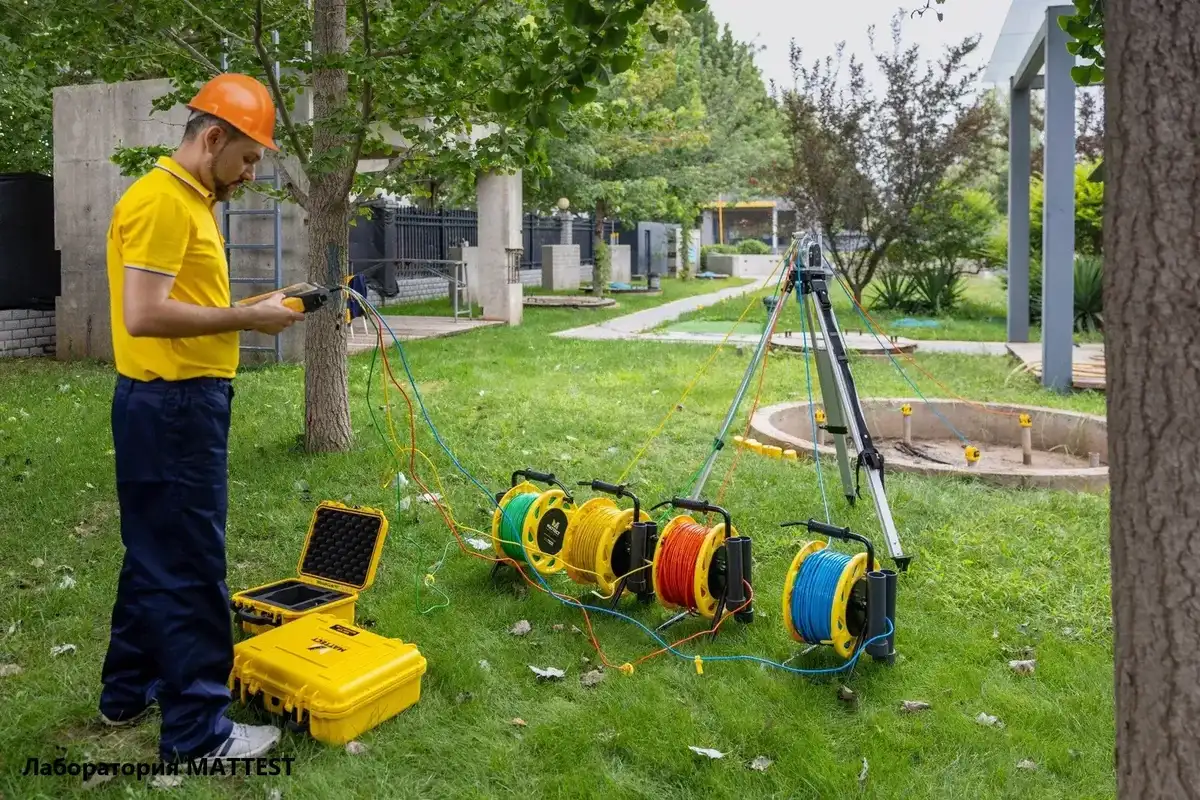
- 05Seismic (low-strain) integrity testing (PIT)
Fast determination of pile length and detection of major acoustic anomalies in the shaft using MIT KIK 2-2K.
- 06Cross-hole ultrasonic testing (CSL)
Detailed multi-channel concrete inspection through pre-installed access tubes using MIT UZK MONOLIT — depth profiles and 3D visualisation.
Fundamental difference between the methods
- A load test measures the actual behaviour of the pile-soil system.
- Integrity testing investigates the quality of the pile shaft and, on its own, does not confirm bearing capacity.
How to choose a pile test method
| Client task | Applicable method | What it reveals |
|---|---|---|
| Confirm pile behaviour under vertical load | Static compression test | Actual settlement-versus-load relationship |
| Verify uplift resistance | Static uplift test | Upward pile movement under stepped loading |
| Check lateral action | Static lateral test | Horizontal pile displacement |
| Rapidly control a batch of piles | Dynamic RSM-PDT | Digital pile response to impact and bearing-capacity estimate |
| Check the pile shaft from the surface | Seismic PIT method | Possible cross-section changes, inhomogeneities and defect zones |
| Check concrete between pre-installed access tubes | Cross-hole ultrasonic testing (CSL) | Concrete-quality distribution along depth between tubes |
Important notes
- RSM-PDT does not replace a static test where the static test is directly required by the project specification. For batch control, the dynamic method is normally correlated with static results.
- The seismic (PIT) method is suitable for fast screening of many piles, but a detected anomaly may require further investigation.
- For cross-hole ultrasonic testing (CSL), the access tubes must be installed inside the reinforcement cage before concreting. The method inspects concrete between the tubes, not the full pile volume outside them.
- GOST 5686-2020 requires integrity checks on bored and cast-in-place piles before static load tests, using methods stipulated by the applicable quality-control standards.
Technical references: FHWA description of integrity testing methods · GOST 5686-2020 registry card (Rosstandart)
How the method is selected
The choice of pile test depends on the project specification, pile design, scope of quality control, cost of the works and the impact of testing on the construction schedule.
Economics of pile testing
The laboratory price is only part of the client's costs
On a major project, a single day of downtime can cost millions: crews, plant, cranes and the next construction stages are all waiting. That is why, when selecting a method, MATTEST considers not only the cost of the test itself, but also the setup time, the duration of the test and the potential construction downtime.
If the project requires a static test, MATTEST performs it and looks for the most rational site arrangement. If the program allows a combined approach, static tests can serve as validation while RSM-PDT provides fast batch control of a larger number of piles.
MATTEST selects a solution that fits the project, reduces the client's costs and does not delay construction without technical necessity.