
Field testing of soils and bases
MATTEST controls the quality of soils, embankments and bases directly on construction sites. We determine the actual density and compaction ratio, investigate the deformation properties of bases, perform trial compaction and help sign off the prepared layer before the next stage of works.
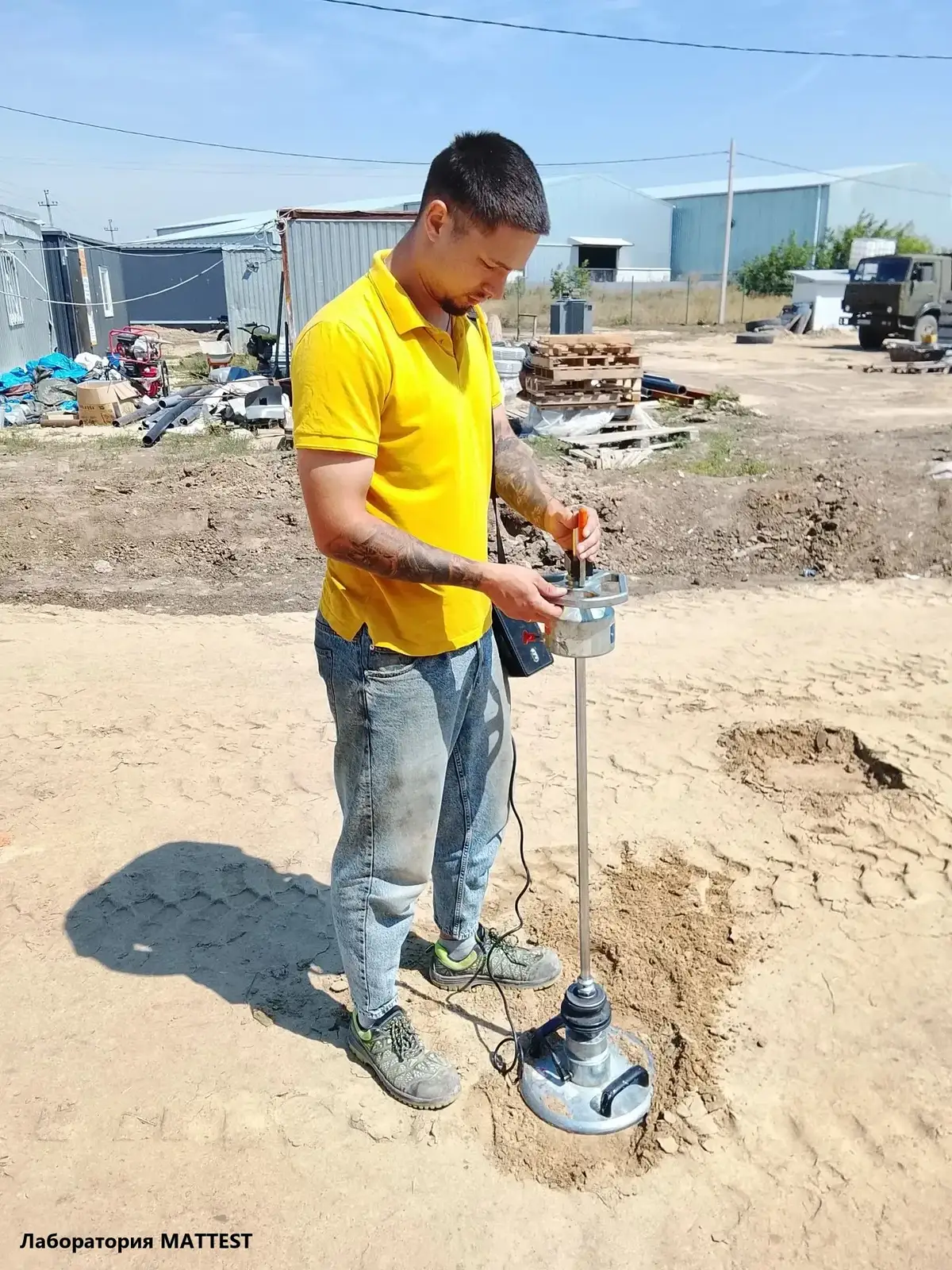
What MATTEST performs in the field
- 01Determination of soil compaction ratio
Cutting ring, volume replacement, paraffin coating, dynamic density gauge, standard Proctor compaction.
- 02Plate load tests of soils and bases
Circular plates 300–600 mm. Deformation modulus, Ev1, Ev2. Excavations, tanks, roads.
- 03Trial compaction
Control section for determining the compaction technology and the required number of roller passes.
- 04Process control
A roller pass or a loaded truck pass for a rapid on-site assessment of the layer condition.
Where the tests are performed
- excavations for buildings and structures
- backfills
- trenches
- soil cushions
- road subgrades
- bases for industrial structures and tanks
- sand, soil and crushed-stone layers
- bases of crushed-stone-sand mix and other coarse-grained materials
Determination of the compaction ratio
The actual dry density of the soil is compared with the maximum density of the same material determined in the laboratory at the optimum moisture content.
Depending on the material, the following methods are used:
- cutting ring method
- volume replacement method
- paraffin coating
- rapid control with a dynamic density gauge
- laboratory standard Proctor compaction
Plate load tests of soils and bases
The tests make it possible to determine the deformation characteristics of the base under load.
The method is applied:
- in excavations
- under the foundations of buildings
- under tanks and heavy structures
- on road subgrades
- on crushed-stone road bases
For roads, a 300 mm diameter circular plate is used. For excavations and industrial bases, plates from 300 to 600 mm in diameter are used depending on the task and the method.
Trial compaction
A control section is prepared on site to determine the rational compaction technology and the number of roller passes required to achieve the design result.
Process control
A pass of a roller or a loaded truck may be used for a rapid qualitative assessment of the layer condition. Such control helps to quickly identify weak areas but does not replace quantitative laboratory determination of density and compaction ratio.
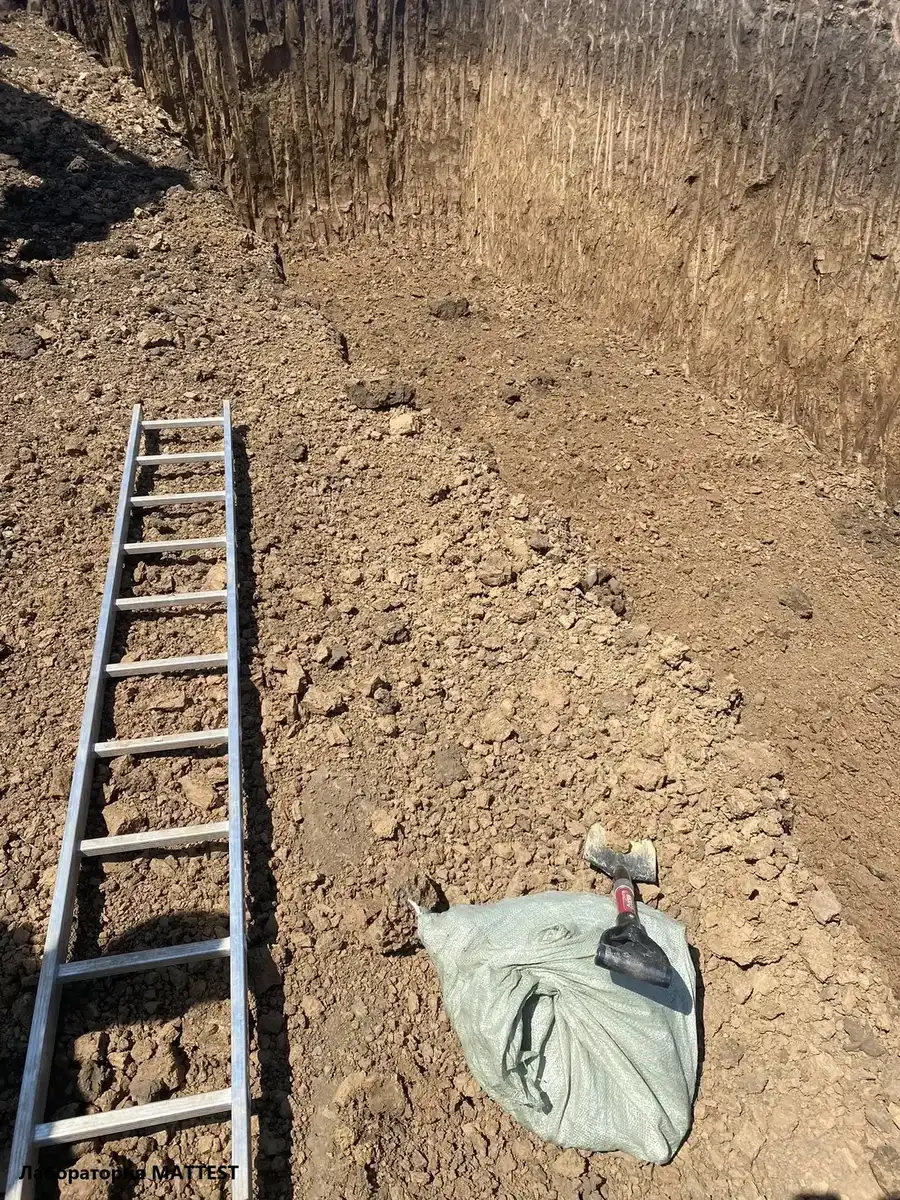
How the method is selected
A single device is not suitable for all materials:
- cohesive fine-grained soil is conveniently controlled with a cutting ring
- for crushed-stone-sand mix and soil with coarse inclusions, volume replacement is used
- a dynamic density gauge allows a large number of points to be surveyed quickly
- the plate is used when the behaviour of the base under load has to be determined
The method is selected based on the project, the material composition, the size of the inclusions and the required parameter.
Deliverables for the client
Depending on the task:
- compaction ratio test report
- actual density and moisture results
- standard Proctor compaction curve
- "load – settlement" curves
- deformation modulus values or Ev1/Ev2
- trial compaction certificate
- technical report on the comprehensive control programme
Applicable standards
- GOST 5180-2015
- GOST 22733-2016
- GOST 20276.1-2020
- O‘z DSt 787-97 or the applicable Uzbek volume replacement method
- DIN 18134 — only for the determination of Ev1/Ev2 when it is required by the project; it is not presented as an Uzbek national standard