
Fresh concrete mix testing
MATTEST performs testing of fresh concrete mix directly on the construction site and in the laboratory. This control verifies the characteristics of the delivered concrete before it is placed into the structure, detects deviations in time and produces control specimens for later strength determination.
The main value of this control: the fresh mix is checked before placement, while the problem can still be detected and corrected, without waiting several days for strength results.
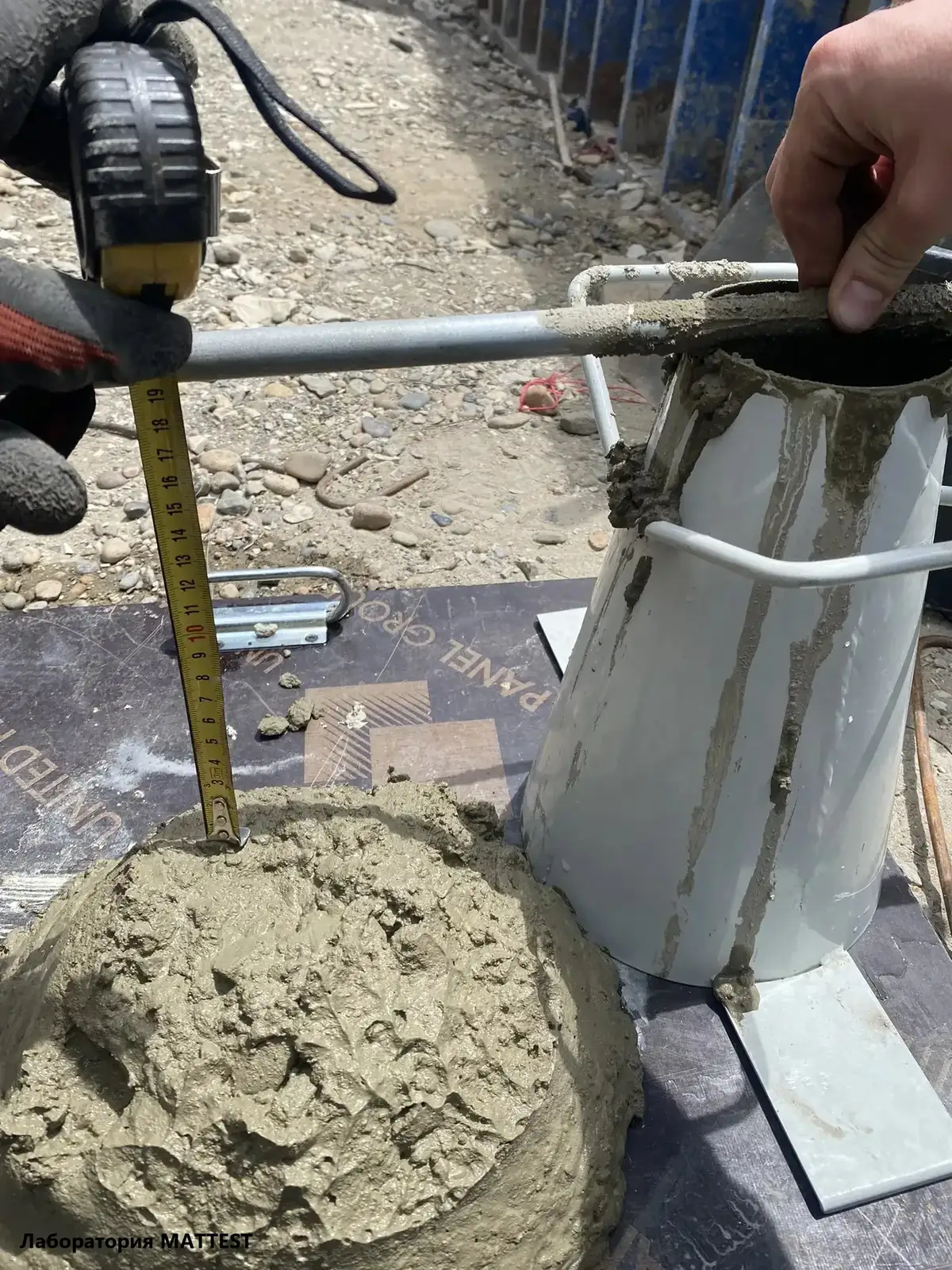
What MATTEST determines in fresh concrete mix
- 01Slump (cone slump method)
Primary indicator of workability of fresh concrete mix.
- 02Vebe consistency (where applicable)
- 03Temperature
- 04Average density
- 05Air content
- 06Segregation resistance
- 07Bleeding and mortar separation
- 08Retention of fresh concrete properties
- 09Casting of control specimens
Cubes 100×100×100 or 150×150×150 mm depending on aggregate fraction.
- 10Concrete mix design
Trial batches, water-cement ratio adjustment, mortar mix design.
- 11Mortar mix testing
Consistency, average density, temperature, water-retaining capacity.
The set of parameters is defined by the intended use of the concrete, the project and the control programme.
Fresh concrete mix control
- slump by the cone slump method
- Vebe consistency where this parameter is applicable
- temperature
- average density
- air content
- segregation resistance
- bleeding and mortar separation
- retention of fresh concrete properties
- comparison of actual values with project requirements and delivery documentation
Casting of control specimens
- cubes 100 × 100 × 100 mm — typically with 5–20 mm crushed stone fraction
- cubes 150 × 150 × 150 mm — with 20–40 mm aggregate fraction
- specimens of other sizes — when required by the method or the control task
- correct compaction, marking and storage of specimens
- strength testing usually at 7 and 28 days
- if required — early control at 3 days, common on projects in Uzbekistan
The quality of the result depends on correct sampling of the mix, compaction of specimens, their geometry, marking and storage conditions.
Mix design
- concrete mix design
- verification of raw materials
- water-cement ratio adjustment
- casting and testing of trial batches
- design of cement-sand mortars
Mortar mix testing
- consistency
- average density
- temperature
- water-retaining capacity
Water absorption of mortar is not included in fresh mix testing: this property is determined on the hardened material.
Why the mix must be checked before placement
Fresh mix control makes it possible to detect in time:
- non-compliant slump
- unauthorised water addition on site
- temperature deviation
- excessive air entrainment
- tendency of the mix to segregate
- change of properties due to prolonged delivery
Applicable standards for Uzbekistan
- GOST 10181-2014 — test methods for fresh concrete mixes
- GOST 27006-2019 — rules for concrete mix design
- GOST 5802-86 — test methods for construction mortars
GOST 10181-2014 and GOST 27006-2019 are applied within the accreditation scope of Uzbek laboratories. For each method MATTEST confirms the current edition of the standard and the exact clause when issuing the test report.